Pattern recognition is a fundamental aspect of many fields, including computer vision, machine learning, and image processing. It involves the identification and categorization of patterns within data, which can range from simple shapes to complex objects. One tool that has been explored for pattern recognition is the box filter. As a supplier of box filters, I am often asked whether these filters can be effectively used for pattern recognition. In this blog post, I will delve into the capabilities of box filters in pattern recognition, exploring their strengths, limitations, and potential applications. Box Filter

Understanding Box Filters
Before discussing the use of box filters in pattern recognition, it is essential to understand what box filters are. A box filter, also known as a moving average filter, is a type of linear filter used in signal processing and image processing. It works by averaging the values of neighboring pixels or data points within a defined window, known as the kernel. The kernel is typically a square or rectangular matrix, and each element within the matrix has the same value.
The formula for a box filter is relatively simple. Given an input image or signal (I(x,y)), the output (O(x,y)) of a box filter with a kernel size of (n\times n) is calculated as:
[O(x,y)=\frac{1}{n^2}\sum_{i = -\frac{n – 1}{2}}^{\frac{n – 1}{2}}\sum_{j = -\frac{n – 1}{2}}^{\frac{n – 1}{2}}I(x + i,y + j)]
This formula essentially takes the average of all the pixels within the (n\times n) window centered at ((x,y)).
Strengths of Box Filters in Pattern Recognition
One of the primary strengths of box filters in pattern recognition is their simplicity. Box filters are easy to implement and computationally efficient, making them suitable for real – time applications. They can quickly smooth out noise in an image or signal, which is often a necessary pre – processing step before pattern recognition.
For example, in edge detection, a common pattern recognition task, a box filter can be used to reduce noise in an image. By smoothing the image, the box filter helps to enhance the edges, making them easier to detect. This is particularly useful in applications such as object recognition, where clear edges are crucial for identifying objects.
Another advantage of box filters is their ability to capture local information. Since the filter operates on a small window of pixels, it can highlight local patterns within an image. This can be beneficial in detecting small objects or features within a larger scene. For instance, in a satellite image, a box filter can be used to identify small buildings or vehicles by enhancing their local patterns.
Limitations of Box Filters in Pattern Recognition
Despite their strengths, box filters also have several limitations when it comes to pattern recognition. One of the main drawbacks is their lack of selectivity. Box filters treat all pixels within the kernel equally, regardless of their importance or relevance to the pattern being recognized. This can lead to the blurring of important features and the loss of fine – grained details.
For example, in an image with high – contrast edges or fine textures, a box filter may smooth out these details, making it more difficult to recognize patterns. Additionally, box filters are not well – suited for detecting complex patterns or shapes. They are better at detecting simple, uniform patterns, such as straight lines or flat regions.
Another limitation is that box filters do not take into account the spatial relationships between pixels outside the kernel. This means that they may miss important global patterns or context information, which is often necessary for accurate pattern recognition.
Potential Applications of Box Filters in Pattern Recognition
Despite their limitations, box filters still have several potential applications in pattern recognition. One area where they are commonly used is in pre – processing for more advanced pattern recognition algorithms. As mentioned earlier, box filters can be used to reduce noise and smooth images, which can improve the performance of subsequent algorithms.
In the field of computer vision, box filters can be used in object detection. For example, in a surveillance system, a box filter can be used to pre – process video frames to reduce noise and enhance the visibility of objects. This can make it easier for more sophisticated object detection algorithms to identify and track objects.
Box filters can also be used in fingerprint recognition. By smoothing the fingerprint image, the box filter can help to enhance the ridges and valleys, making it easier to match fingerprints against a database.
Combining Box Filters with Other Techniques
To overcome the limitations of box filters in pattern recognition, they can be combined with other techniques. For example, box filters can be used in conjunction with edge detection algorithms, such as the Sobel or Canny edge detectors. The box filter can first be used to reduce noise in the image, and then the edge detector can be applied to identify the edges.
Another approach is to use box filters in a multi – scale analysis. By applying box filters of different sizes to an image, it is possible to capture patterns at different scales. This can be particularly useful in detecting objects of different sizes within an image.
Conclusion
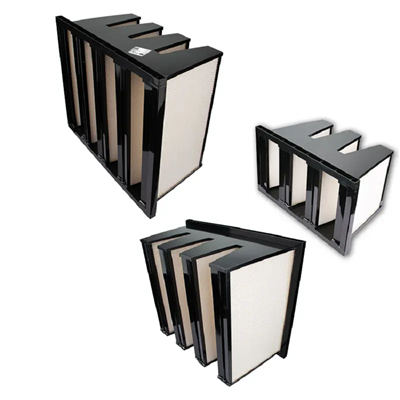
In conclusion, while box filters have their limitations, they can still play a valuable role in pattern recognition. Their simplicity and computational efficiency make them a useful tool for pre – processing and detecting simple patterns. By combining box filters with other techniques, it is possible to overcome their limitations and achieve more accurate pattern recognition.
Box Filter If you are interested in exploring the use of box filters for your pattern recognition applications, I encourage you to reach out to me. As a supplier of high – quality box filters, I can provide you with the products and expertise you need to implement effective pattern recognition solutions. Whether you are working on a small – scale project or a large – scale industrial application, I am here to help you find the right box filter for your needs.
References
- Gonzalez, R. C., & Woods, R. E. (2008). Digital Image Processing. Pearson Prentice Hall.
- Jain, A. K., Duin, R. P. W., & Mao, J. (2000). Statistical Pattern Recognition: A Review. IEEE Transactions on Pattern Analysis and Machine Intelligence, 22(1), 4 – 37.
- Szeliski, R. (2010). Computer Vision: Algorithms and Applications. Springer.
Xiamen Zhongxinglong Air Conditioning Equipment Co., Ltd.
We’re professional box filter manufacturers and suppliers in China, specialized in providing high quality products and service. We warmly welcome you to wholesale customized box filter from our factory.
Address: Xiwu factory area, Xike town, Tongan district, Xiamen city, Fujian province, China
E-mail: root@xmzxl.com
WebSite: https://www.zoslongairfilter.com/
