When I first started working as an industrial door control box supplier, I thought the main challenge was just building boxes that could open and close doors reliably. But three years into the job, a customer out in the North Sea called me in a panic. Their offshore facility’s dock door control box had failed after a salt spray storm, shutting down their entire cargo operation for 12 hours. That day, I learned harsh environments don’t just test a control box’s performance—they test its protection levels. Since then, I’ve dug deep into what those levels actually mean, and how we design our boxes to stand up to the worst industrial conditions out there. Industrial Door Control Box
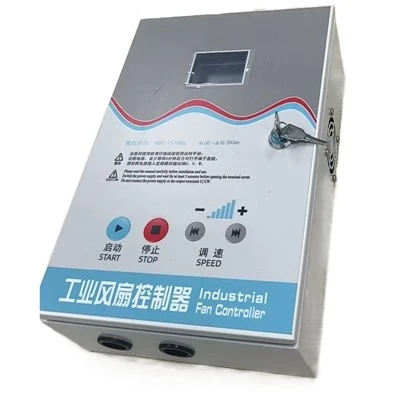
First, let’s get something straight: “protection level” isn’t a vague buzzword. It’s a standardized measurement, most often defined by IP (Ingress Protection) ratings and NEMA (National Electrical Manufacturers Association) types, two systems that every industrial door control box needs to follow to be useful in tough spots. I used to mix these two up when I was new—IP focuses on solid and liquid intrusion, while NEMA covers more specific industrial stressors like corrosion, dust, and even accidental impact from falling tools. For a dock door in a coastal port, a good IP rating might be IP65 (dust-tight and protected against low-pressure water jets), but a NEMA Type 4X is actually better there because it’s specifically built to resist saltwater corrosion, which IP ratings don’t account for fully. That North Sea customer taught me: you can’t just check one rating; you have to match it to the exact environment the door box will live in.
Let’s break down the common harsh environments our clients face, and how our control boxes’ protection levels handle each one. First up, extreme temperature swings. I’m based in the Midwest, where winter temperatures can drop to -20°F and summer days top 100°F, and I’ve seen control boxes fail because their internal components couldn’t expand or contract without breaking. Our control boxes are tested to work in temperatures from -40°F to 185°F, which covers most industrial climates, but we’ve adjusted that for clients in places like the Arizona desert, where some of our boxes now have additional thermal insulation on the internal circuit boards. The key here is that protection for temperature isn’t just about the box shell—it’s about how we seal internal parts, use heat-resistant wiring, and even add small thermal vents that let air circulate without letting dust in. Last year, a grain elevator in Wyoming told us their old control box had stopped working because the wiring had become brittle in -25°F weather. We swapped it for a box with cold-resistant copper wiring and a thicker enclosure, and they haven’t had a single issue since.
Dust and debris are another big one. Think about a sawmill, a coal mine, or a construction site—dust isn’t just messy; it can clog circuit boards, cause short circuits, and make contacts fail. The IP67 rating is a common one for these environments, but we went a step further for our mining clients with IP68-rated control boxes, which are fully dust-tight and can even be submerged in water for short periods (in case of a spill or washdown). A lot of suppliers will just use a standard gasket around the box door, but we use a double-layered silicone gasket that compresses tightly when the door is shut, so even fine coal dust can’t get in. I once visited a construction site where a competitor’s control box had been covered in concrete dust for six months—they had to take it apart and clean every part, and even then it didn’t work right. Our boxes installed next to it had no dust inside at all; the double gasket made all the difference.
Then there’s moisture and corrosion. This is where that North Sea story comes back in. Saltwater, humidity, and even agricultural chemicals from fertilizer plants eat away at metal components, causing rust and electrical failure. For coastal facilities, chemical plants, or food processing plants, NEMA Type 4X is non-negotiable for us. The X stands for extra corrosion resistance, so our Type 4X enclosures are made from 304 or 316 stainless steel, not the regular steel some suppliers use. We also use powder coating that’s tested to resist salt spray for 1,000 hours—meaning if you spray saltwater on it every hour for a full month, the finish won’t rust or peel. A food processing client in Florida told us their old control box had rusted out after a year from the steam and cleaning chemicals used daily. Our Type 4X box is now in place for three years, and it still looks almost new. We also add a desiccant packet inside the enclosure for humid environments, which absorbs moisture that might seep in over time—another small change that makes a huge difference.
Impact and physical damage are often overlooked too, but industrial sites are busy places—forklifts bump into walls, tools fall, equipment shifts. The NEMA Type 5 rating (for dust resistance) is great, but Type 7 or Type 12 are better for areas with high impact risk. Our control boxes have a hard outer shell that can withstand a 5-pound object falling from 3 feet high without cracking, and the mounting brackets are reinforced so they don’t pull away from the wall if a door slams nearby. Last year, a logistics center had a forklift knock into a door frame, and their old control box was crushed. Our box on the adjacent door only had a small scratch on the enclosure, and the internal electronics were completely unharmed. That’s the kind of protection level we design for—something that doesn’t just work when installed, but survives the daily chaos of industrial work.
Wait, but what about power surges? A lot of people don’t realize that’s part of the environment too. Lightning strikes, heavy machinery turning on and off, grid fluctuations can blow out control box circuits. We add surge protection devices (SPDs) rated for 20kA to all our industrial door control boxes, which absorb excess voltage before it reaches the internal components. For clients in areas with frequent storms, we even upgrade to 40kA SPDs. A manufacturing plant in Ohio had a lightning strike last year, and their old control box was fried. Our box with the upgraded SPD kept working, and they didn’t have to pause production at all. That’s protection level as more than just enclosure strength—it’s protecting the internal systems too.
I know some clients might look at these ratings and think, “Can’t I just get a cheaper box that’s ‘good enough’?” But in industrial settings, downtime costs real money. A logistics center I work with says every hour their door is out costs them $12,000 in delayed shipments. Spending a little more on a control box with the right protection levels saves them from that loss. We don’t push the highest rating for every job—we talk to clients about their specific environment: is it coastal? Desert? Mine? Food processing? Then we match the IP, NEMA, and internal components to that. For example, a small warehouse in a mild climate might only need an IP54 box, which is more affordable and works perfectly. But a petrochemical plant needs a NEMA Type 7 box, which is explosion-proof too (we didn’t mention that earlier, but it’s critical for environments with flammable gases).
Over the years, we’ve tested our control boxes in harsh conditions that most suppliers would never expose their products to. We do salt spray tests in our own lab, leaving boxes in a chamber that sprays saltwater 24/7 for weeks. We test temperature extremes in a climate-controlled room that can go from -40°F to 185°F in an hour. We even run dust tests where we blow fine coal dust into the enclosure and check for any particles getting inside. All that testing means when we send a control box to a client, we know it will work. That North Sea client from three years ago? They’re now one of our repeat customers, and they told us their new box survived a worse storm than the one that broke the first. That’s the proof of good protection levels.
If you’re an industrial facility manager, maintenance supervisor, or project engineer, you know how frustrating it is to deal with control box failures in the middle of a shift. You don’t have time to troubleshoot or wait for a replacement. That’s why we take protection levels seriously—because we know a control box isn’t just a piece of equipment; it’s part of your operation. It needs to stand up to whatever your environment throws at it, so you can keep your doors moving, your shipments going, and your business running.

If you’re looking for an industrial door control box that’s built for your harsh environment, let’s connect. We can walk through your site, talk about the conditions you face, and recommend the right protection levels for your needs—no one-size-fits-all solutions, just something tailored to your operation. Reach out to us to start a conversation about your control box requirements and how we can help you avoid downtime.
Industrial Fan Regulator References
- National Electrical Manufacturers Association (NEMA) Standards Publication NEMA 250-2020, Enclosures for Electrical Equipment (1000 Volts Maximum)
- International Electrotechnical Commission (IEC) Standard Publication IEC 60529:2017, Degrees of Protection Provided by Enclosures (IP Code)
- Underwriters Laboratories (UL) Standard UL 508A, Standard for Industrial Control Panels
- American Society of Heating, Refrigerating and Air-Conditioning Engineers (ASHRAE) Handbook 2022: Industrial Applications, Environmental Considerations for Electrical Equipment
Wuxi Rstar Electric Co., Ltd.
With abundant experience, we are one of the most professional industrial door control box manufacturers and suppliers in China. Welcome to wholesale bulk customized industrial door control box at competitive price from our factory. If you have any enquiry about quotation, please feel free to email us.
Address: 9th Floor, Building 9, Shengfeng Lianzhi Valley, No.67 Zhujiang Road, Xinwu District, Wuxi City
E-mail: rstarbz@163.com
WebSite: https://www.rstar-wx.com/
