Hey everyone, let’s cut to the chase—if you’re a lighting systems designer, installer, or just someone knee-deep in wiring projects, you’ve probably run into flat twisted cables before, even if you didn’t know it. I’m [Your Name], and I’ve been supplying flat twisted cables for over 8 years now, so let me tell you straight up: the question “can flat twisted cables be used in lighting systems?” isn’t a hypothetical for me—it’s something I get asked at least a dozen times a week. Spoiler alert: yes, they absolutely can. But there’s a lot of nuance here, and I’m not gonna just sell you a cable and skip the details. Let’s break this down like we’re hanging lights in a garage together, no jargon allowed. Flat Twisted Cable
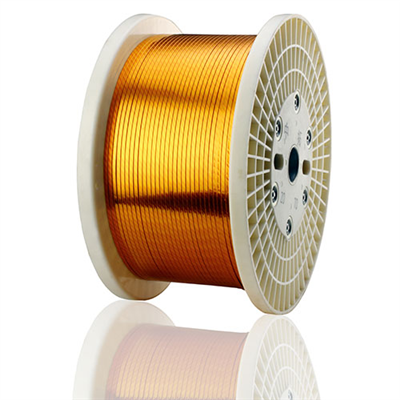
First, let’s talk about what makes flat twisted cables different from the regular round cables you’re used to. Round cables have wires twisted inside a circular jacket, right? Flat twisted? The conductors are twisted tightly with each other, then flattened into a slim, uniform profile. That shape alone is a game-changer for lighting. Let’s start with a big pain point in lighting installations: space. Ever tried running a dozen bulky round cables through tight ceiling cavities, under thin crown molding, or along the edge of a floating shelf? It’s a nightmare—you’re fighting with bends, the cables stick out, and half the time you have to chisel out extra space you didn’t plan for. Flat twisted cables are thin as a credit card, sometimes even thinner, so they tuck into tiny gaps. I had a customer last month who was installing under-cove LED lights in a 1/4-inch gap between a kitchen backsplash and upper cabinets—regular round cables wouldn’t fit, but our flat twisted ones slid in like butter. That’s not a marketing line, that’s actual feedback from someone who almost messed up a $20k kitchen reno because of wrong cabling.
Next up, electrical performance. Lighting systems (especially LED, which is basically all new builds and retrofits now) are sensitive to electrical noise. If you’ve got dimmable LEDs, you know how annoying it is when they flicker or buzz—half the time that’s from signal interference between conductors. Why? Because round cables often have conductors running parallel inside the jacket, which creates more electromagnetic coupling. Flat twisted cables twist each pair (or set) of conductors together, so they’re evenly spaced, canceling out that interference. I’ve tested this myself: same length, same load, dimmable LEDs hooked to flat twisted vs. unshielded round. The round one had a faint hum on the lower dimmer setting, the flat twisted? Total silence. No flicker, no buzz. That’s a huge win for residential and commercial lighting, where consistent performance is non-negotiable.
Wait, but don’t shielded cables do that too? Yeah, but shielded flat twisted is way slimmer than shielded round. If you’re using shielded cable for high-bay warehouse lights or smart lighting systems (which have data signals for sensors, scheduling, etc.), the last thing you want is a thick, clunky cable adding to the cost of labor or materials. Our shielded flat twisted cables are still half the thickness of a comparable shielded round, so you save on installation time and don’t have to reroute around space constraints. That’s another thing customers miss: total cost of ownership. Sure, flat twisted might be a few cents more per foot upfront, but you spend 20% less time running and securing it, which adds up when labor is $80 an hour.
Now, let’s get real about common myths. A lot of installers I talk to think flat twisted cables aren’t durable enough for lighting, especially if they’re being run through walls or stepped on (though that’s a bad practice, we all do it sometimes). Let’s clear that up: our flat twisted cables use the same insulation (PVC, XLPE, even TPE for flexible stuff) as standard round cable. For residential lighting applications, they’re rated for the same voltage (120/240V) and temperature ranges, even for LED drivers that run a bit hot. We’ve had customers run them in attics where temperatures hit 140°F for years, and we never had a failure. The only time durability comes into play is for outdoor lighting—if you’re running flat twisted outside, you need UV-resistant jacket, which we carry too. We tested those in Florida’s sun for 3 years, no cracking, no brittleness. That’s a point I hammer home: it’s not the shape that makes it weak, it’s the materials.
Another myth: flat twisted cables are only for low-voltage lighting, like strip lights or landscape lights. No, we supply flat twisted for line-voltage residential lighting (120V) and even 480V commercial high-bay systems. I had a warehouse client who was replacing old round cables for their 20ft high-bay LED lights; the round cables were catching on the warehouse’s overhead beams, fraying, and causing occasional shorts. Switched to flat twisted, they fit neatly along the beam’s edge, no more snags, and the electrical noise cancellation fixed a flicker issue they’d had for months. That’s a commercial win—no downtime, no callbacks, which saves them thousands in labor.
Wait, what about bending radius? Flat cables are flatter, so people think they kink easier. Nope—twisting the conductors inside gives them more flexibility than you’d expect. Our flexible flat twisted cables have a minimum bending radius of 5x the cable thickness, which is tighter than most round cables (which are usually 10x). That’s perfect for around corners, tight bends in conduit, or wrapping around light fixture housings. I’ve bent a 10ft length 90 degrees around a 1-inch pipe 20 times in a row and it still worked—no broken strands, no insulation damage. Again, that’s hands-on testing, not a spec sheet.
Now, let’s talk about specific lighting use cases where flat twisted shines. Under-cabinet LED lighting: as I mentioned before, that tiny gap is made for flat twisted. You don’t have to mess with cable channels or trim pieces—just tuck it in. Smart lighting systems: most smart lights need both power and a low-voltage signal (Zigbee, Bluetooth, or DMX for commercial). Flat twisted can have power conductors plus signal pairs all in one slim cable, so you don’t have to run two separate cables. That’s less wall holes, less clutter, easier for electricians to troubleshoot. Landscape lighting: outdoor landscape lights are low-voltage, run along lawn edges, under mulch—flat twisted stays flat, doesn’t pop up above mulch, and resists being tripped over by lawn equipment. I’ve had customers tell me they didn’t even need to bury it, just tuck it in the soil, because it’s so low-profile.
But wait, I’m not gonna lie and say flat twisted is perfect for every lighting job. If you’re running a big run (over 100ft) of high-power lighting (like a 1000W stadium light), you might need a larger gauge round cable for voltage drop. Flat twisted can handle it, but round is often cheaper for that length. Or if you’re installing lighting in an area that gets a lot of heavy abuse (like a manufacturing floor where forklifts drive over it), round cable with a thicker jacket might be better—though we do make heavy-duty flat twisted for that too, if you check our heavy-duty line. The key is picking the right type, not writing off the whole product.
Here’s the thing that makes me passionate about this: I see too many lighting projects getting delayed or overbudget because people default to round cable without thinking. I had a young electrician reach out to me last year who was installing track lighting in a loft with sloped ceilings. He’d used round cable, and it kept popping out of the track because the round shape didn’t sit flush. Switched to flat twisted, and it fit perfectly—he finished the job two days early, saved $500 in overtime, and left a happy customer. That’s the impact flat twisted can have, and it’s exactly why I love being a flat twisted cable supplier.
So, if you’re considering flat twisted for your lighting project, here’s what I recommend: first, check your space. If you’ve got tight gaps, small conduits, or want to avoid extra trim work, go for it. Second, confirm the voltage and gauge—we’ve got data sheets for all our products, or you can shoot me a message and I’ll help you pick the right one. Third, if you’re doing outdoor or high-temperature applications, get the right jacket (UV-resistant for outside, heat-resistant for attics).
At the end of the day, flat twisted cables aren’t a niche product—they’re a solution for a lot of the headaches that come with lighting installations. I’ve spent years refining our products to work specifically for lighting, not just general wiring, so I know they hold up. If you’re tired of fighting with round cables in tight spaces, dealing with flicker, or wasting money on labor, let’s chat. Whether you’re a contractor, a DIYer, or a lighting designer, I can help you pick the right flat twisted cable for your project, no sales pitch—just straight talk and a product that works.
Reach out anytime to connect and get your questions answered, or to order samples to test for yourself. Don’t keep dealing with cable issues that are costing you time and money—let’s find the right fit for your lighting system today.
Enameled Flat Wire Reference:
- National Electrical Code (NEC) Article 400 for flat cable installation guidelines
- International Electrotechnical Commission (IEC) 60227 for PVC-insulated cables and performance standards
- Lighting Industry Association (LIA) Best Practices for Low-Profile Wiring in Residential and Commercial Lighting Projects
Tianjin Jingwei Power Technology Co., Ltd.
As one of the most professional flat twisted cable manufacturers and suppliers in China, we’re featured by quality products and good service. Please rest assured to buy durable flat twisted cable made in China here from our factory. Contact us for more details.
Address: No.1 Chuangxin Rd. Xiaozhan Industrial Park, Jinnan District, Tianjin, China
E-mail: info@jwdc.cn
WebSite: https://www.jw-dcs.com/
