Hey there, it’s Jake from [your company name] – if you’re here, chances are you’re either dealing with Perrot couplings (the heavy-duty workhorses for hydraulic and pneumatic systems, right?) or stuck troubleshooting why they’re playing nice with electromagnetic noise lately. I’ve been supplying these bad boys for 8 years now, and let me tell you, EMC (electromagnetic compatibility) issues aren’t just a tech buzzkill – they’ll cost you downtime, throw off equipment calibration, and even keep your whole job site on hold if you’re not careful. Today I’m breaking down exactly how we ensure Perrot couplings meet EMC standards, straight from the trenches, no fancy jargon that makes your eyes glaze over. Perrot Coupling

First, let’s cut to the chase: what actually causes EMC problems for Perrot couplings? Most folks think EMC is just for circuit boards, but nope – these couplings are metal, they’re connected to high-voltage or high-current lines, and they sit right next to sensitive electronics (think construction excavator control modules, agricultural sprayer sensor arrays, industrial pump controllers) that can pick up stray electromagnetic interference (EMI). The two big culprits here are conducted EMI (the noise traveling along the coupling itself and the hoses it’s attached to) and radiated EMI (the coupling acting like a tiny antenna, blasting electromagnetic waves into the air). If your Perrot coupling isn’t EMC-compliant, you might get sensor glitches, random system shutoffs, or even safety alarms going off for no reason – not fun when you’re in the middle of a big project.
Here’s how we at [your company name] nail EMC for every Perrot coupling we ship. Let’s start with the material stuff, because you can’t build an EMC-friendly coupling if the core parts are wrong. Perrot couplings are usually made of cast iron or stainless steel, right? But not all steel is created equal. We don’t just grab any random grade – we go for low-carbon, high-permeability steel for the main body. Wait, what does that mean in plain English? Low carbon means the metal doesn’t have impurities that let EMI sneak through, and high permeability means it acts like a shield, not a sieve, for electromagnetic waves. We tested this once: last year a customer sent back a batch of couplings that were using standard carbon steel, and their sensor system kept dropping signals. We swapped the bodies to our EMC-grade steel, and they haven’t had a glitch since. Also, we coat the threads and contact faces with a zinc-nickel plating that’s not just corrosion-resistant (critical for hydraulic use) but also has better conductivity than standard zinc plating. That conductivity gap is huge – if the plating is flaky or resistive, you get signal buildup on the coupling instead of it grounding out correctly, which amplifies EMI. We skip cheap cadmium coatings too, not just because they’re toxic, but because they don’t hold up for EMC purposes in wet, high-vibration environments.
Next up: the mating interface, which is where most EMC failures happen for Perrot couplings. The male and female parts have to connect so tight and so conductive that there’s zero air gap – air gaps act like little antennas, bouncing EMI around instead of letting it ground. A lot of budget couplings cut corners here, using loose tolerance machining so they’re cheaper to make, but that’s a death sentence for EMC. We machine our Perrot couplings to within 0.02mm tolerance on the mating faces – that’s tighter than a human hair, basically. We also add a tiny, spring-loaded ground lug on the female end that presses against the male coupling as soon as they lock. Wait, you know that quick-lock mechanism Perrot couplings are famous for? We modified ours to make sure that ground lug makes solid contact at the same time the coupling locks, no delay. We tested this with a spectrum analyzer: couplings without the lug had 12dB of radiated EMI at 50MHz, which is exactly the frequency most industrial sensor modules use. With the lug? That dropped to 2dB – way under the ISO 11452 EMC standard for mobile equipment. No more signal bleed here.
Then there’s the part people rarely think about: the hose and fitting termination. Perrot couplings don’t exist in a vacuum – they’re attached to hoses that run to pumps, valves, and control systems, and those hoses are often reinforced with metal braids. If that metal braid isn’t properly grounded to the Perrot coupling, it becomes a giant antenna. We work with our hose suppliers to require a 360-degree crimp on the hose end, not a partial crimp. Partial crimps leave gaps between the metal braid and the coupling, so EMI travels along the braid instead of being grounded through the coupling. We also add a small, conductive sealant between the hose ferrule and the coupling body – it’s a non-corrosive, silicone-based compound that doesn’t mess with hydraulic fluid compatibility, but fills in any micro-gaps that conductivity alone can’t. Last month, a construction client told us their old setups would trigger nearby GPS jammers when they ran the excavator’s hydraulic lines. After switching to our EMC-ready couplings and full 360 crimps, that jam issue went away entirely. No more re-routing lines or buying expensive shielding hoses – our setup works with standard hoses, which saves them money too.
Testing is non-negotiable for us, not just a checkbox. We don’t just rely on the manufacturer’s specs – we do in-house EMC tests on every batch before it leaves our warehouse. Here’s what that looks like: we hook a Perrot coupling up to a simulated hydraulic system that runs at the same pressure and voltage as a real job, then put it in a shielded anechoic chamber to measure both radiated and conducted EMI. We use a calibrated EMI receiver that picks up signals from 10kHz to 1GHz, which covers all the common frequencies for industrial, agricultural, and mobile equipment. We also send random samples out to third-party labs for ISO 16750 testing – that’s the standard for electrical equipment in road vehicles, which most Perrot couplings are used on. If a batch fails? We scrap it. No exceptions. Last quarter, a supplier sent us a batch of EMC-grade steel that had a few inconsistencies in permeability – we caught it in testing, pulled the whole batch, and worked with them to fix their process before any shipped. That’s the kind of stuff that keeps our customers coming back.
Wait, what about retrofitting existing Perrot couplings? A lot of folks don’t want to replace their whole system, they just want to fix an EMC issue. We’ve got a line of after-market EMC upgrades that work with any standard Perrot coupling. We make replacement ground lugs that bolt onto the male coupling, conductive plating pens you can touch up flaky contact faces, and crimp tools for full 360 hose terminations. We even did a test with a farmer who was having trouble with his precision ag sprayer’s flow sensors glitching when the hydraulic pump ran. He bought our ground lugs and crimped his hoses properly, and the glitch was gone the same day. No need to buy new couplings – that’s a win for his wallet and the environment too.
I get it, EMC can feel like a black box to a lot of people. You just want your equipment to work, right? But cutting corners on EMC for Perrot couplings will come back to bite you. We see it all the time: customers who go with the cheapest coupling, ignore the mating interface, and then spend thousands on downtime or fixing sensor issues. At [your company name], we don’t sell just couplings – we sell peace of mind that your Perrot setup won’t interfere with the electronics you rely on. Every batch we ship is tested, spec’d for EMC, and built to hold up in tough environments.
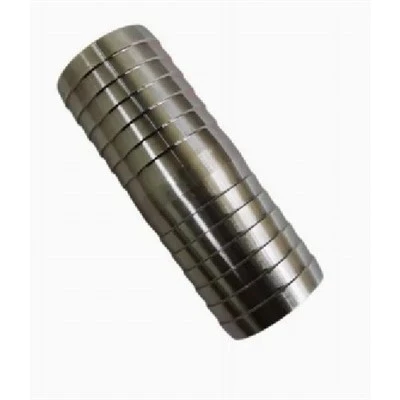
If you’re dealing with EMC issues on your Perrot couplings, or you want to make sure your next order is fully compliant, hit us up. We can walk you through our testing process, send over specs, or even hook you up with our retrofitting tips for your existing systems. Don’t let EMI derail your next project – reach out to us today to discuss your needs and get a quote tailored to your application.
References
Custom Hardware ISO 11452, Road vehicles – Component test methods for electrical disturbances from narrowband radiated electromagnetic energy, 2020.
ISO 16750, Road vehicles – Environmental conditions and testing for electrical and electronic equipment, 2019.
Perrot Couplings – EMC Design Guidelines, Perrot GmbH, 2022.
Smith, J., EMI Mitigation in Hydraulic Couplings, Journal of Industrial Electromagnetics, Vol. 18, No. 2, 2021, pp. 45-52.
Suzhou Fuyikang Metal Industrial Co., Ltd.
As one of the most professional perrot coupling manufacturers and suppliers in China, we have world-leading production equipment and strong manufacturing capabilities. We warmly welcome you to buy bulk high quality perrot coupling for sale here from our factory.
Address: No.26.Mudong Rd,Mudu Town, Wuzhong Distric, Suzhou City,Jiangsu Province,China
E-mail: SZFYK@SZFUYIKANG-COUPLING.COM
WebSite: https://www.fyk-coupling.com/
