In the dynamic landscape of modern industry, the role of high – end testing instruments cannot be overstated. As a seasoned supplier in the field of testing instruments, I’ve witnessed firsthand the transformative power these tools bring to various sectors. In this blog, I’ll delve into the key features that distinguish high – end testing instruments from their standard counterparts. Testing Instrument
Precision and Accuracy
One of the most defining features of high – end testing instruments is their exceptional precision and accuracy. Precision refers to the degree of consistency and reproducibility of measurements, while accuracy is about how close the measured value is to the true value. High – end instruments are engineered with state – of – the – art technology and high – quality components to minimize errors.
For example, in the field of electronics testing, a high – end oscilloscope can measure electrical signals with a resolution down to the nanosecond range. This level of precision is crucial for engineers working on high – speed digital circuits, where even the slightest timing deviation can lead to system failures. Similarly, in the pharmaceutical industry, high – end spectrometers can detect trace amounts of impurities in drugs with an accuracy of parts per billion. This is essential for ensuring the safety and efficacy of medications.
Manufacturers of high – end testing instruments invest heavily in research and development to improve precision and accuracy. They use advanced calibration techniques, such as laser – based calibration for measuring instruments, and sophisticated algorithms to correct for environmental factors like temperature and humidity. These efforts ensure that the instruments provide reliable and consistent results over time.
Sensitivity
High – end testing instruments are also characterized by their high sensitivity. Sensitivity refers to the ability of an instrument to detect small changes in the measured quantity. In many industries, detecting subtle variations is critical for quality control and process monitoring.
In environmental monitoring, high – end air quality sensors can detect pollutants at extremely low concentrations. For instance, they can measure the presence of particulate matter (PM2.5 and PM10) in the air with a high degree of sensitivity. This is important for assessing air quality and implementing effective pollution control measures.
In the biotechnology sector, high – sensitivity fluorescence microscopes can detect single molecules or cells. This allows researchers to study biological processes at the molecular level, which is essential for understanding diseases and developing new treatments. The high sensitivity of these instruments is achieved through the use of advanced optical systems, high – gain detectors, and low – noise electronics.
Wide Measurement Range
Another significant feature of high – end testing instruments is their wide measurement range. They can handle a broad spectrum of values, from very small to very large. This versatility makes them suitable for a wide range of applications.
In the field of pressure measurement, a high – end pressure sensor can measure pressures from a few millibars to several thousand bars. This is useful in industries such as oil and gas, where pressure can vary significantly depending on the location and process. In the field of temperature measurement, high – end thermometers can measure temperatures from cryogenic levels (below – 200°C) to extremely high temperatures (above 2000°C). This wide range is valuable in materials science, where different materials may need to be tested at various temperatures.
The ability to cover a wide measurement range is achieved through the use of multiple measurement scales, automatic range switching, and advanced signal processing techniques. This ensures that the instrument can accurately measure the quantity of interest, regardless of its magnitude.
Speed and Efficiency
Time is often of the essence in industrial and research settings. High – end testing instruments are designed to deliver results quickly and efficiently. They are equipped with high – speed processors and advanced data acquisition systems that can handle large amounts of data in a short period.
In the manufacturing industry, high – end automated testing equipment can test multiple products simultaneously, reducing the testing time per unit. For example, in semiconductor manufacturing, high – speed wafer testers can test thousands of integrated circuits on a single wafer in a matter of minutes. This efficiency is crucial for meeting production deadlines and ensuring product quality.
In research laboratories, high – end spectrometers and chromatography systems can analyze samples in a matter of seconds or minutes. This allows researchers to conduct more experiments in less time, accelerating the pace of scientific discovery. The speed of these instruments is further enhanced by the use of parallel processing, optimized algorithms, and high – performance hardware.
Connectivity and Data Management
In today’s digital age, connectivity and data management are essential features of high – end testing instruments. These instruments are designed to interface with other devices and systems, allowing for seamless integration into existing workflows.
Most high – end testing instruments are equipped with various communication interfaces, such as Ethernet, USB, and Wi – Fi. This enables them to transfer data directly to a computer, a server, or a cloud – based platform. Data can then be analyzed, stored, and shared using specialized software.
For example, in a quality control laboratory, multiple testing instruments can be connected to a central data management system. This system can collect data from all the instruments, perform statistical analysis, and generate reports automatically. This not only improves the efficiency of the testing process but also provides better visibility into the quality of the products being tested.
Reliability and Durability
High – end testing instruments are built to last. They are constructed using high – quality materials and undergo rigorous quality control processes during manufacturing. This ensures that they can withstand harsh operating conditions and provide reliable performance over an extended period.
In industrial environments, where instruments may be exposed to dust, moisture, vibrations, and extreme temperatures, the reliability of the testing equipment is of utmost importance. High – end instruments are designed with robust enclosures, sealed connectors, and temperature – compensated components to ensure their durability in such conditions.
For example, in a mining or construction site, high – end testing instruments need to be able to withstand the rough handling and harsh environmental conditions. These instruments are often built to meet industry standards for shock resistance and ingress protection. This reliability reduces the need for frequent repairs and replacements, ultimately saving time and money for the users.
Customization and Flexibility
Every customer has unique requirements, and high – end testing instruments are often customizable to meet these specific needs. Manufacturers of high – end instruments offer a range of options for customization, including software features, measurement ranges, and interfaces.
In the aerospace industry, for example, testing instruments may need to be customized to meet the specific requirements of a particular aircraft or spacecraft. This could involve adding specialized sensors, modifying the measurement algorithms, or integrating the instrument with other on – board systems.
High – end testing instruments also offer flexibility in terms of their operation. They can be programmed to perform different types of tests, and the test parameters can be easily adjusted. This allows users to adapt the instruments to different applications and changing testing requirements.
Ease of Use
Despite their advanced features, high – end testing instruments are designed to be user – friendly. They come with intuitive interfaces, clear displays, and easy – to – understand controls. This makes them accessible to a wide range of users, from experienced technicians to novice operators.
Many high – end instruments are equipped with touchscreen displays and graphical user interfaces (GUIs) that simplify the operation. They also provide prompt notifications and instructions to guide the user through the testing process. Additionally, the software associated with these instruments is often designed with a user – centric approach, allowing users to easily analyze and interpret the test results.
After – Sales Support
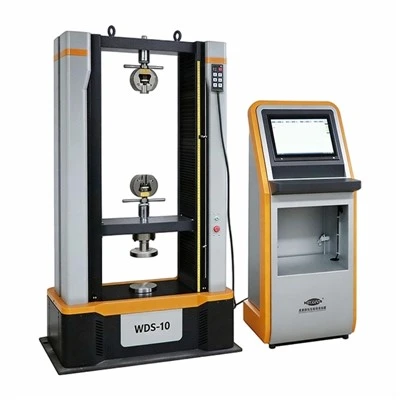
As a supplier of high – end testing instruments, I understand the importance of after – sales support. We offer comprehensive support services, including installation, calibration, maintenance, and repair. Our team of experienced technicians is available to provide on – site assistance and remote support whenever needed.
We also provide training programs for our customers to ensure that they can use the instruments effectively and safely. These training programs cover both the operation of the instruments and the interpretation of the test results. By offering excellent after – sales support, we aim to build long – term relationships with our customers and ensure their satisfaction with our products.
Laboratory Instruments In conclusion, high – end testing instruments offer a wide range of features that make them indispensable in modern industry and research. From precision and accuracy to connectivity and after – sales support, these instruments are designed to meet the most demanding requirements. If you’re in the market for high – end testing instruments and want to learn more about how our products can meet your specific needs, we invite you to engage with us for procurement discussions. Our team is ready to assist you in finding the perfect solution for your testing requirements.
References
- Cooper, David. "Advanced Testing Instrumentation: Principles and Applications." Wiley – InterScience, 2015.
- Smith, John. "The Future of High – End Testing Technology." Journal of Instrumentation, vol. 10, no. 3, 2020.
- Brown, Alice. "Precision and Accuracy in Modern Testing Instruments." Measurement Science Review, vol. 22, no. 5, 2022.
Hebei Wanluda Testing Instrument Equipment Co., Ltd.
As one of the most professional testing instrument manufacturers and suppliers in China, we have world-leading production equipment and strong manufacturing capabilities. Please rest assured to buy advanced testing instrument made in China here from our factory.
Address: Zhouguantun Village, Xian County, Cangzhou City, Hebei Province, P.R.China
E-mail: wldinstrument@163.com
WebSite: https://www.wldinstrument.com/
