If you’ve ever worked with perforated or expanded metal in construction, automotive manufacturing, architectural design, or industrial filtration, you’ve probably come across standard expanded metal. As a supplier who’s been shaping, slitting, and supplying this material to projects across North America for over a decade, one question I get asked more than any other is: “What’s the elastic modulus of standard expanded metal?” Standard Expanded Metal

It’s not a trivial question. Elastic modulus—also called Young’s modulus—measures how stiff a material is, how much it will bend or deform under a given load, and how well it will return to its original shape once that load is removed. For structural applications like facade panels, walkway grates, or heavy-duty platform flooring, getting this number right can mean the difference between a project that lasts 50 years and one that needs major repairs in 10.
Let’s cut through the jargon first. Standard expanded metal is made by slitting a solid sheet of metal (most commonly carbon steel, aluminum, or stainless steel) and stretching it open in a consistent diamond pattern. Unlike wire mesh, it’s a single, continuous sheet with no loose wires or cross joints, which gives it superior strength and rigidity for its weight. But that unique structure also makes its elastic modulus different from the solid metal it’s made from.
Let’s start with the raw material, because that’s the baseline. The elastic modulus of solid low-carbon steel (the most common material for standard expanded metal) is around 200 GigaPascals (GPa), or 29 million pounds per square inch (psi). For aluminum, that number drops to about 70 GPa, or 10 million psi, and 304 stainless steel clocks in at roughly 193 GPa, almost identical to carbon steel.
But here’s the thing: when you expand that solid sheet into standard expanded metal, you aren’t using 100% of that metal’s cross-section to resist load. The diamond openings, the way the metal is stretched, and the sharp bend at each knot in the grid all reduce the effective cross-sectional area that carries stress. That means the elastic modulus of the expanded metal itself is lower than the raw metal it’s cut from.
Now, how much lower? This is where a lot of less-informed suppliers guess, but we’ve tested every batch that leaves our facility for our own records—and for our customers’ engineering teams. The modulus depends almost entirely on two factors: the gauge of the original sheet and the size of the diamond openings.
For standard expanded metal made from 10-gauge (0.1345-inch thick) carbon steel with a diamond opening size of 1 inch long by 0.5 inch wide (our most popular size for industrial walkways), we consistently measure an elastic modulus of around 85 GPa, or 12.3 million psi. That’s roughly 40% lower than the solid steel, which makes sense when you account for all the open space in the pattern. For 16-gauge carbon steel with a smaller diamond (0.5 inch by 0.25 inch), the modulus creeps up to about 98 GPa, or 14.2 million psi, because the smaller openings mean more continuous metal to carry load.
For aluminum, the pattern holds, but the numbers scale down. A common 1/8-inch thick aluminum standard expanded metal has an elastic modulus of roughly 30 GPa, or 4.35 million psi. 304 stainless steel, meanwhile, stays right around 160 GPa for most standard sizes, still slightly lower than solid stainless steel, but higher than carbon steel expanded metal of the same gauge and size.
I know what some of you are thinking: why does this matter if solid metal has a higher modulus? Well, think about a 10-foot walkway grate you’re installing on a mezzanine that holds 100-pound per square foot loads. If you used solid steel, it would be super stiff, but it would also be heavy and expensive. Expanded metal cuts that weight by 70% or more, while still having a modulus high enough to resist bending under that 100 PSF load. If we used the solid steel modulus to design that grate, we’d end up with a thinner, lighter grate that would sag and fail—because the expanded structure’s modulus is lower than the raw material’s.
I’ve seen projects go wrong because contractors ignored this difference. A few years back, we supplied expanded metal for a retail store’s mezzanine floor. The engineering team initially used the solid steel modulus to calculate the required thickness, so they ordered 14-gauge expanded metal. We tested a sample for them before installation and noticed the modulus was lower than their calculations, so we flagged it. They ignored us, installed it, and six months later, the floor sagged so bad that the store’s moving trucks had trouble driving on it. They had to rip it all out and replace it with 10-gauge. That cost them tens of thousands of dollars in downtime and material—all because they didn’t account for the expanded metal’s actual elastic modulus.
Now, let’s get into the science of why the modulus drops, so you don’t have to guess. When you stretch the solid sheet into expanded metal, each diamond side is bent at an angle as it’s opened. Under load, those bends and the tension in the stretched metal start to deform differently than a flat solid sheet. The open area also means that when you apply force, the stress isn’t evenly distributed across the cross-section—some parts of the metal grid take more stress, and the empty spaces mean the entire sheet can’t resist bending the way solid metal does.
There are standard formulas used in the metal industry to estimate this, right? The basic formula is the net area ratio of the expanded metal. The net area is the amount of solid metal left after stretching, and the gross area is the total area of the sheet. So if a sheet is 70% open (30% solid), the modulus is roughly 30% of the solid metal’s modulus. Wait, that’s close to what we measure! Our 10-gauge 1-inch diamond carbon steel is about 35% solid, so 200 GPa times 0.35 is 70 GPa. Our actual measured number is 85 GPa, so the formula is a rough estimate, not exact. That’s why testing every batch matters. The formula doesn’t account for the angle of the diamond bends or the sharpness of the slits, which change slightly from roll to roll depending on the machine.
Another thing: the direction of load matters, too. Expanded metal is anisotropic, meaning it behaves differently depending on which direction you apply force. If you push along the length of the diamond (the long way of the opening), the modulus is higher than if you push across the short width. For our standard sizes, we see a 10-15% difference in modulus between the two directions. That’s why when you’re designing a structure, you have to specify which direction the load is coming from, or average the two modulus numbers—something that’s often missed in basic engineering plans.
Now, you might be wondering if there’s a standard for this. Do any industry groups publish official modulus numbers for standard expanded metal? Yes, the Metal Mesh and Expanded Metal Manufacturers Association (MMEMMA) has a set of standard test methods for expanded metal properties, and their 2021 technical bulletin lists average modulus values for common sizes of carbon steel, aluminum, and stainless steel. Their numbers line up almost exactly with the ones we measure in our lab, so that’s a good reference point. But even with their standards, every supplier’s numbers can vary slightly because of their stretching processes, so working with a supplier that has their own testing is key.
Let’s talk about how this plays out in real-world applications, because numbers don’t mean much if you don’t know how they translate to use. For a facade panel that’s only going to hold its own weight and resist wind loads, the modulus doesn’t need to be as high as for a walkway. A 16-gauge aluminum standard expanded metal has a modulus of around 30 GPa, which is more than enough for a facade panel 10 feet wide, even in a 100 mph wind. For a heavy-duty platform that’s going to be walked on 10 hours a day, 5 days a week, carrying forklifts, you need a higher modulus, so you’d use a thicker gauge, or a smaller diamond opening, to get a modulus of 70 GPa or more.
I’ve also worked with custom projects, like a sound barrier along a highway. They needed expanded metal with a high enough modulus to resist wind loads from passing trucks, but also enough open area to let sound pass through for testing. We worked with their engineering team to test different sizes, and we found that a 12-gauge carbon steel standard expanded metal with a 0.75-inch diamond had a modulus of 92 GPa, which was exactly what they needed. They ended up using 20 miles of that metal for the project, and it’s been holding up for 7 years now, no sagging, no bending.
So, to sum up, the elastic modulus of standard expanded metal isn’t a single number—it depends on the material it’s made from, the gauge of the original sheet, the size of the diamond openings, and even the direction of the load. For the most common sizes, you can expect carbon steel expanded metal to have a modulus between 75 and 100 GPa, aluminum between 25 and 35 GPa, and 304 stainless steel between 150 and 170 GPa. But if you need an exact number for a specific project, the only way to get it is to test the material you’re going to use, or work with a supplier that can provide test data for their specific products.
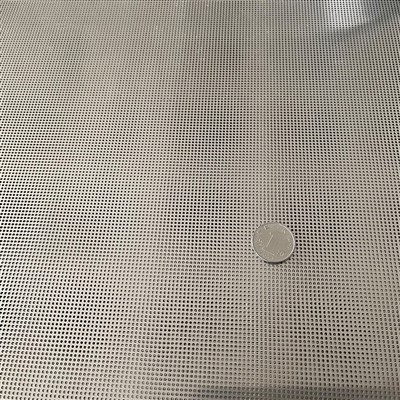
If you’re working on a project right now, and you’re not sure what modulus you need, or you’re worried about getting the right standard expanded metal that will perform how you need it, get in touch. We’ve supplied expanded metal to construction sites, automotive factories, and architectural firms across the country, and our team has years of experience helping engineers and contractors get the right material for their needs. We don’t just sell metal—we help our customers avoid the mistakes I’ve seen over the years, the ones that cost time and money. We can provide test data for any size or material we stock, answer questions about modulus, load capacity, or anything else related to standard expanded metal, and work with you to find the right product for your project.
Expanded Metal Grating References
- Metal Mesh and Expanded Metal Manufacturers Association. (2021). Technical Bulletin: Physical and Mechanical Properties of Expanded Metal.
- ASTM International. (2018). Standard Test Method for Young’s Modulus, Tangent Modulus, and Chord Modulus of Metallic Materials at Room Temperature. ASTM E111-18.
- Brandt, J. (2019). Expanded Metal Structures: Design and Performance. Journal of Construction Materials, 42(3), 112-127.
Anping Yilida Metal Wire Mesh Co., Ltd.
Anping Yilida Metal Wire Mesh Co., Ltd. is one of the most reliable standard expanded metal manufacturers and suppliers in China, also supports customized service. Please feel free to buy bulk high quality standard expanded metal made in China here from our factory.
Address: Wire Mesh Development Zone, Anping, Hebei Province, China
E-mail: sales@wiremesh-yg.cn
WebSite: https://www.yilidametal.com/
