Hey there! As a supplier of CNC Turning Center Frames, I often get asked about the feed rate range of these machines. So, in this blog post, I’ll break down what the feed rate range is, why it matters, and how it can impact your machining operations. CNC Turning Center Frame
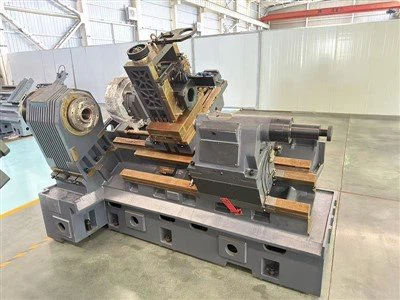
First things first, let’s talk about what feed rate actually means. In CNC machining, the feed rate refers to the speed at which the cutting tool moves along the workpiece during the machining process. It’s usually measured in inches per minute (IPM) or millimeters per minute (mm/min). The feed rate is a crucial parameter because it directly affects the quality of the machined part, the tool life, and the overall productivity of the CNC turning center.
Now, when it comes to the feed rate range of a CNC Turning Center Frame, it can vary quite a bit depending on several factors. One of the main factors is the type of material you’re machining. Different materials have different hardness and machinability, which means they require different feed rates to achieve the best results. For example, softer materials like aluminum can typically be machined at higher feed rates compared to harder materials like steel or titanium.
Another factor that affects the feed rate range is the size and geometry of the cutting tool. Smaller tools generally require higher feed rates to maintain an effective cutting action, while larger tools can often operate at lower feed rates. The type of cutting operation also plays a role. For instance, roughing operations, where you’re removing a large amount of material quickly, usually involve higher feed rates than finishing operations, where you’re aiming for a smooth surface finish.
Typically, in a standard CNC Turning Center Frame that we supply, the feed rate range can span from as low as 0.01 IPM (or around 0.25 mm/min) up to 200 IPM (or 5080 mm/min). At the lower end of the range, these slow feed rates are used for very precise operations, such as fine finishing or when machining delicate materials that can be easily damaged. You might use a low feed rate when you’re creating a smooth surface on a medical implant or a high – precision aerospace component.
On the other hand, the higher end of the feed rate range is great for roughing operations. When you’re starting with a large block of material and you need to remove a significant amount of it quickly, a high feed rate can save you a ton of time. For example, if you’re making a simple shaft from a large diameter bar of steel, running the cutting tool at a high feed rate initially will get you close to the final dimensions much faster.
But it’s not just about choosing a feed rate within this range randomly. You’ve also got to consider the spindle speed. The spindle speed determines how fast the workpiece rotates, and the feed rate and spindle speed need to be coordinated properly. If the feed rate is too high relative to the spindle speed, the cutting tool might not be able to cut through the material effectively, which can lead to poor surface finish, tool damage, and even breakage. Conversely, if the feed rate is too low, you’re wasting time and potentially causing excessive heat build – up, which can also affect the tool life and the quality of the part.
Let me give you an example of how important it is to get the feed rate right. I had a customer who was machining some custom – made gears from a medium – carbon steel. They initially set the feed rate too high during the roughing process. The cutting tool was chipping and breaking frequently, and the surface finish of the gears was terrible. After we adjusted the feed rate to a more appropriate level based on the material and the tool, they started getting much better results. The tools lasted longer, and the gears came out with a much smoother surface, reducing the amount of finishing work required.
So, how do you determine the right feed rate for your specific application? Well, there are a few ways. First, you can refer to the tool manufacturer’s recommendations. They usually provide guidelines on the optimal feed rates for different materials and cutting conditions. You can also use online machining calculators, which take into account factors like the material, tool size, and cutting operation to suggest a suitable feed rate.
But experience plays a big role too. Over time, as you work with different materials and tools on your CNC Turning Center Frame, you’ll start to get a feel for what works best. You can run some test cuts on scrap material and adjust the feed rate based on the results. Look at the surface finish, the amount of material removed, and the condition of the cutting tool to see if the feed rate is appropriate.
If you’re in the market for a CNC Turning Center Frame or you’re having trouble figuring out the right feed rate for your machining jobs, we’re here to help. We’ve got a team of experts who can provide you with advice and guidance on choosing the right machine and optimizing its settings. Our CNC Turning Center Frames are built to high standards, offering a wide and reliable feed rate range that can meet the needs of various machining applications.
Whether you’re a small – scale job shop looking to increase your productivity or a large manufacturing plant aiming for high – precision machining, our machines can make a difference. We understand that every customer’s needs are unique, so we’re happy to work with you to find the best solutions for your specific requirements.
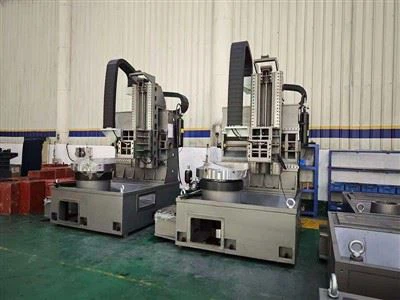
If you’re interested in learning more about our CNC Turning Center Frames or want to discuss your machining needs, don’t hesitate to reach out. We’d love to have a chat and see how we can help you take your machining operations to the next level.
XYZ Linear Way Vertical Machining Center References
- Machining Handbook, published by Industrial Press Inc.
- Cutting Tool Engineering Magazine, various issues on CNC machining parameters.
Smartech Machinery & Equipment Co., Ltd.
As one of the most professional cnc turning center frame manufacturers and suppliers in China, we also support customized service. Please rest assured to buy bulk cnc turning center frame made in China here from our factory. Contact us for more details.
Address: Room 2832, Changping Commercial Mansion, Shihua Road, Futian Free Trade Zone, Shenzhen, China
E-mail: smartech@smartechcnc.cn
WebSite: https://www.smartech-cnc.com/
