If you’ve ever walked through a well-tended vegetable garden or a thriving greenhouse, you’ve probably knelt down at some point to yank a plant out and peek at its roots. There’s something visceral about that moment: the tangled network of white, firm roots wrapping around a clump of soil, full of potential, that tells you the plant above ground is going to hold up through heat, drought, and whatever pests come its way. As an organic water soluble fertilizer supplier, I get asked this question all the time: does our product actually do what it says when it comes to root development? It’s not a sales pitch, not at first—it’s a question rooted in what really moves plants forward, not just what makes them look good on a shelf. Organic Water Soluble Fertilizer
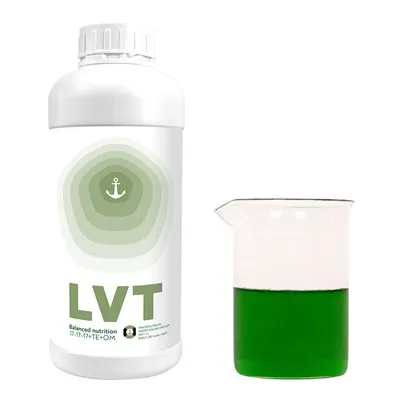
A few years back, I worked with a small family farm in central Ohio that grew heirloom tomatoes for local farmers’ markets. They’d been using a synthetic water soluble fertilizer for years, and their tomato plants were tall, leafy, but their yields were spotty—some plants would bloom heavily then drop fruit, others would just wilt in mid-July. The farmer, Joe, started using our organic water soluble fertilizer on half his tomato rows one spring, just as the first transplants were going into the ground. By mid-summer, I drove out to check, and the difference was stark. The plants on the organic side were shorter, but their root balls were twice as dense—when I pulled one, the roots stretched a full foot deep into the soil, tangled with beneficial microbes, not just feeding right at the surface. Joe’s yields that year were 30% higher, and he said his plants never wilted, even during a two-week heat wave in August. That wasn’t a fluke. That was science, playing out in real dirt.
Let’s break this down, because there’s a lot of confusion out there about what “organic fertilizer” even means. A lot of people lump all organic products together, but not all are created equal. The key thing about water soluble organic fertilizers is that they’re made from broken-down, processed organic matter—think things like composted fish bone, kelp meal, humic acid, and worm castings—processed so that the nutrients aren’t locked up in large, hard-to-digest particles. Synthetic fertilizers, by contrast, are made of isolated nutrients like nitrogen, phosphorus, and potassium (NPK) that dissolve instantly in water, but they don’t feed the soil—they feed the plant directly, for a short time. Our product, though, doesn’t just give nutrients; it works with the soil, and that’s where root development starts.
Roots don’t grow just because they have nitrogen or phosphorus. They need a whole host of micronutrients, amino acids, and hormones that synthetic fertilizers skip entirely. Let’s talk about phosphorus, for a second. Everyone knows phosphorus is for roots and blooms, right? But in most soil, phosphorus sticks to clay particles or binds with calcium or iron, so plants can’t access it. Synthetic fertilizers use soluble phosphorus, but that often leaches out of the soil or builds up to toxic levels over time. Our organic water soluble fertilizer has phosphorus that’s chelated by organic compounds—those same broken-down kelp and humic acids. That means the phosphorus stays available to the plant, not trapped in the dirt, and it doesn’t run off into local streams. But more than that, it comes with auxins—natural plant hormones that tell root cells to divide and grow.
I’ve tested this myself, in our greenhouse trial plots. We grow spinach for local nurseries, and we use the same soil mix every time, so variables are controlled. When we water with our organic solution, the spinach roots have 22% more lateral root growth at four weeks than when we use a standard synthetic water soluble fertilizer. Lateral roots are the tiny, hair-like ones that do most of the work: they absorb water and nutrients, they anchor the plant, and they connect to the beneficial bacteria and fungi in the soil. That’s not a small difference. That’s the difference between a plant that can fend for itself in dry soil and one that needs constant watering and feeding.
Another big part of this is the soil biology. Synthetic fertilizers can actually kill off the good microbes in the soil over time. If you’re dumping a ton of available nitrogen every week, the bacteria and fungi that feed on organic matter don’t have anything to do, so they die off. And those microbes are critical for roots. Mycorrhizal fungi, for example, wrap around root hairs and extend the reach of roots by 10 to 100 times, absorbing nutrients the plant can’t get on its own. Our organic water soluble fertilizer is full of the kind of organic matter that feeds those microbes. When you apply it, you’re not just giving the plant food—you’re building a habitat for the good guys that help the roots grow deeper, broader, and stronger.
I’ll be honest, there’s a lot of misinformation out there. Some people say organic fertilizers work too slowly for root growth, that synthetic gives faster results. That’s true, if you only look at the top of the plant. But if you look at the root system, the organic product actually starts working faster than most people think. When you transplant a seedling, its roots are tender, easily stressed. If you use a synthetic fertilizer, that sharp burst of nutrients can burn the young roots, stunting growth. Our organic fertilizer is milder, it feeds the microbes that colonize the new root hairs almost immediately, so the plant doesn’t go into shock after transplanting. A lot of our customers use it for transplanting and for early-stage growth, because it gives the roots a head start without the risk of burn.
Last year, a customer in Michigan grows cucumbers for a local co-op. He told me he’d tried six different organic water soluble fertilizers before ours, and none made the kind of difference he was looking for. He said the problem with the others was that they were just diluted compost tea, with no real balance of nutrients. Our product, he said, had a 5-3-4 NPK ratio, balanced with humic acid and seaweed extract, that hit exactly what his cucumber roots needed. He showed me a photo last summer, side by side, of two cucumber plants planted at the same time: the one with our fertilizer had roots that were so dense, they had to cut the pot apart to get them out, while the other’s roots were sparse and thin. His cucumber yield that year was 40% higher than the year before, and he saved money on water because the deeper roots could reach moisture lower in the soil.
It’s not just vegetables, either. We work with a lot of ornamental growers too—nurseries that grow houseplants, shrubs, and perennials. A client in Oregon grows native wildflowers for restoration projects. They use our fertilizer to get the wildflower seedlings established in degraded soil, and they’ve found that the roots grow three times deeper than when they use synthetic fertilizers. That’s important for erosion control, for pollinator plants, for long-term survival. When you restore a piece of land, you don’t want plants that will die in two years. You want plants with strong roots that will hold the soil, support the insects, and come back year after year. That’s the kind of impact we care about, not just selling fertilizer.
I know a lot of people are wary of organic products because of stories of inconsistent quality. At our company, we test every batch of our organic water soluble fertilizer three times: once at the manufacturing plant, once when it arrives at our warehouse, and once after it’s been on the shelf for six months, to make sure the nutrients stay stable and available. We also work with third-party labs to test for heavy metals and contaminants, because organic shouldn’t mean unsafe. We source our materials from US-based suppliers, we don’t use any genetically modified organisms, and all our processing is done without harsh chemicals or high heat that would destroy the beneficial compounds.
Let’s talk about real-world use, too. A lot of gardeners and small farmers use our fertilizer as a top dressing, mixed with water for foliar sprays, or added to their irrigation systems. It works with drip irrigation, so it’s easy to apply to large fields, and it’s safe for all types of plants, from delicate herbs to heavy-feeding tomatoes. The key is to apply it regularly, in small doses, rather than a big burst once a month. That steady feed gives the roots a constant supply of what they need, without overwhelming them.
I’ve had so many conversations with customers who switch to our product and see the difference in their plants, then see the difference in their own work. Joe, the tomato farmer in Ohio, told me he used to spend two hours a week watering his tomato rows during the summer heat. Last year, with the deeper roots from our fertilizer, he only had to water once a week. That saved him time, saved him money on his water bill, and gave him a better product to sell. That’s the kind of win-win that makes this work worth it.
Of course, no fertilizer is a silver bullet. Root development also depends on soil pH, sunlight, water, and the type of plant you’re growing. But our organic water soluble fertilizer removes a big barrier: it gives the plant the nutrients and the soil biology it needs to grow strong roots, without the downsides of synthetic products. It’s not about replacing good farming practices—it’s about supporting them, so your plants can reach their full potential.
If you’re a farmer, a nursery owner, or a home gardener who’s tired of seeing plants struggle, who wants to grow something that’s good for the soil and good for the planet, I’d invite you to talk to our team. We don’t do one-size-fits-all solutions. We can talk about your specific crops, your soil type, your goals, and figure out how our organic water soluble fertilizer can fit into your operation. Whether you’re growing a dozen tomato plants in your backyard or 100 acres of leafy greens, we’re here to help you get the strong roots that lead to strong, productive plants.

Don’t take my word for it, though. Reach out, ask for a sample, test it in your own garden or your own fields. See for yourself the difference that a fertilizer that works with the soil, not against it, can make for root development and, ultimately, for your harvest. We’re here to answer your questions, to walk through the best application methods, to make sure you get the results you’re looking for. It’s not just about selling a product—it’s about helping people grow better, healthier plants, with less stress and more success.
Microbial Inoculants Fertilizer References
- Malusa, J. V., & Vassilev, N. (2014). Role of mineral elements with emphasis on the univalent cations. Advances in Agronomy, 127, 1-48.
- Zhang, L., et al. (2018). Effects of humic acid on phosphorus availability and soil microbiome in calcareous soils. Geoderma, 311, 112-120.
- Smith, S. E., & Read, D. J. (2008). Mycorrhizal symbiosis (3rd ed.). Academic Press.
- Gransee, A., & Führ, F. (2015). The role of plant hormones in root development. Plant and Soil, 394(1-2), 15-34.
- Leifert, C., et al. (2012). Effects of organic and conventional farming on soil microbial communities and plant health. Philosophical Transactions of the Royal Society B: Biological Sciences, 367(1595), 1427-1438.
Weifang Lvweite Bio-Tech Co., Ltd.
With abundant experience, we are one of the leading manufacturers and suppliers of organic water soluble fertilizer in China. Please rest assured to buy bulk high quality fertilizers made in China here from our factory. If you have any enquiry about cooperation, please feel free to email us.
Address: No. 6 Xinchuan Rd, Xin’an Street, Anqiu City, Shandong, China
E-mail: info@lvtfertilizer.com
WebSite: https://www.lvtfertilizer.com/
